What to Wear to Make a Great Impression: Job Interview Outfit Frameworks
Have you ever stood in front of an open closet thirty minutes before a major job interview, completely paralyzed by decision fatigue? We have all been there, holding up three different outfits while asking ourselves if a blazer looks too formal or if dark jeans look too casual. That nervous, last-minute wardrobe panic can throw off your focus right when you need to feel your absolute best. I remember my very first big corporate interview, where I wore an ill-fitting, itchy wool jacket that made me sweat through the entire panel discussion.
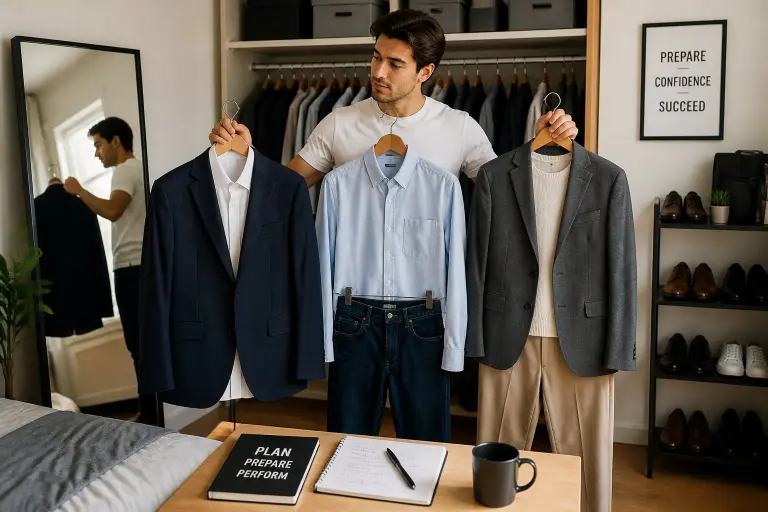
That uncomfortable experience taught me a crucial lesson about professional presentation. Dressing for a job interview shouldn’t feel like a high-stakes guessing game. When you build your look around proven, strategic frameworks, you eliminate pre-interview anxiety and showcase your absolute best, most competent self.
Whether you are interviewing at a traditional law firm, a trendy tech startup, or a remote-first creative agency, I have got you covered. Here is your ultimate guide on what to wear to make a great impression: job interview outfit frameworks that will help you nail your look with zero stress.
Decoding Company Culture Before You Pick an Outfit
Before you pull a single hanger from your closet, you need to investigate the company’s internal culture. Dressing appropriately isn’t about blending into the background; it is about showing your interviewers that you already understand their professional world.
The Golden Rule of Interview Attire Level

How do you match an office dress code without underdressing or overdressing? The classic rule of thumb is to dress one step above the company’s daily employee attire. If the staff wears casual jeans and polo shirts, you should aim for elevated business casual. If they wear business casual daily, you should lean toward full formal business wear.
This simple rule demonstrates respect for the process while showing subtle executive awareness. It signals to the hiring manager that you treat the opportunity with genuine seriousness.
Researching Office Vibe and Dress Codes
Do you know where to look to uncover a company’s true dress code? Start by examining their official social media pages, company culture videos, and team photos on LinkedIn. Notice whether employees wear structured jackets, relaxed button-downs, or casual knitwear.
If you are still unsure after researching, reach out directly to the recruiter or hiring coordinator. A quick, polite message asking about the typical office dress code shows great initiative and foresight.
The 3 Core Job Interview Outfit Frameworks
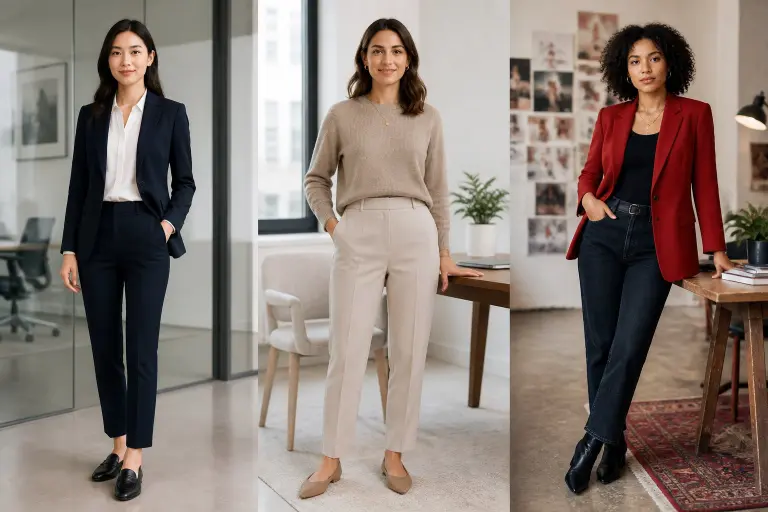
Instead of building a unique outfit from scratch every time, rely on these three versatile frameworks tailored to specific industry standards.
                  [ Assess Company Culture ]
                              │
      ┌───────────────────────┼───────────────────────┐
      ▼                       ▼                       ▼
[ Formal Corporate ]   [ Business Casual ]    [ Creative / Modern ]
  • Navy/Onyx Suit       • Tailored Trousers    • Dark Wash Denim
  • Pressed Blouse       • Fine Knit Sweater    • Statement Blazer
  • Leather Loafers      • Pointed Flats        • Tailored Footwear
Framework 1: The Classic Formal Corporate Look
Traditional corporate environments—such as banking, corporate law, insurance, and executive management—demand classic business formal attire. Your clothing choices here should communicate reliability, authority, and meticulous attention to detail.
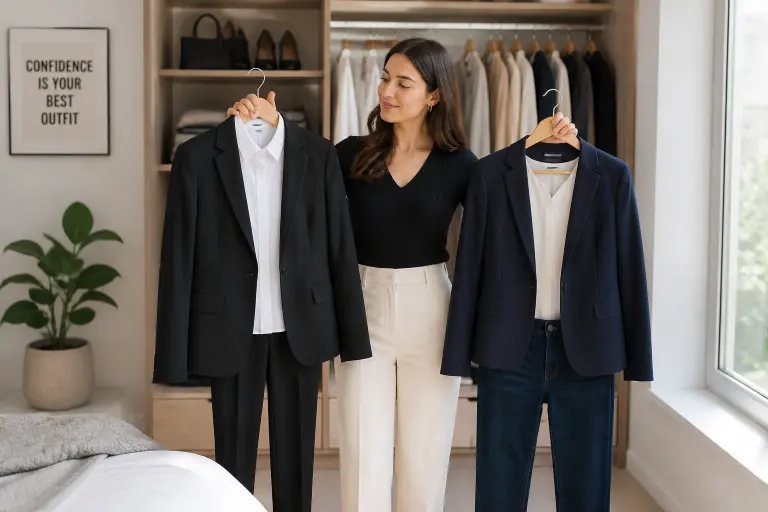
- The Anchor Piece: A well-fitted suit jacket or blazer paired with matching tailored trousers or a knee-length pencil skirt. Stick to timeless dark neutral colors like midnight navy, charcoal gray, or deep onyx.
- The Base Layer: A crisp, ironed white or light blue button-down shirt, or a high-neck silk shell top.
- The Footwear: Closed-toe leather loafers, low block heels, or classic leather pumps in dark neutrals.
Framework 2: The Modern Business Casual Standard
Most modern workplaces—including education, healthcare management, tech firms, and marketing agencies—operate within a business casual framework. You want to look clean, smart, and professional without appearing stiff or rigid.
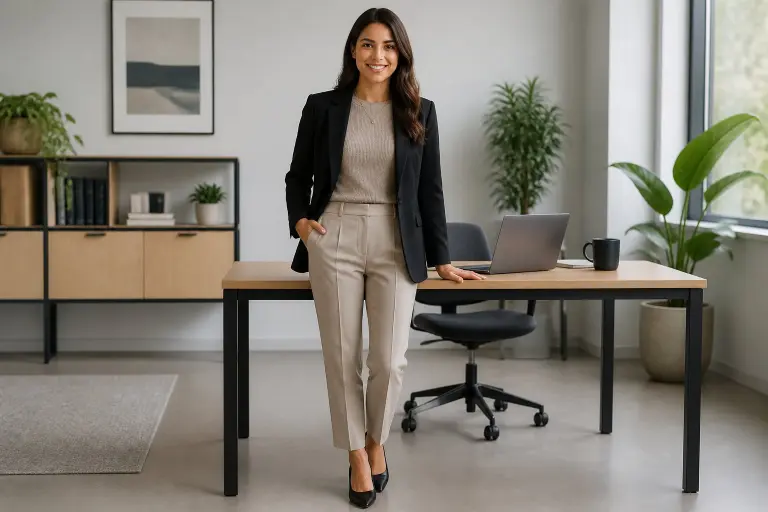
Pair structured ankle-length trousers with a fine-gauge knit sweater or a relaxed silk blouse. Layering an unstructured blazer over a simple top instantly creates an approachable, polished look. IMO, a sharp blazer paired with tailored trousers is the ultimate unbeatable interview combo! 😉
Framework 3: The Creative and Startup Hybrid
Creative industries—like graphic design, architecture, fashion media, and early-stage tech startups—encourage subtle personal flair. The goal here is balancing professional structure with modern, creative energy.
- Elevated Bottoms: Dark-wash jeans with zero distressing, or wide-leg pleated trousers.
- Statement Layers: A tailored blazer in a rich color like olive, plum, or subtle plaid.
- Polished Accessories: Sleek leather boots, architectural flats, or clean minimal leather sneakers (if the environment is explicitly ultra-casual).
Dressing for Virtual and Video Interviews
Are video interviews easier to dress for than in-person meetings? While sitting in front of a webcam offers certain flexibilities, virtual interviews introduce unique visual challenges that require special preparation.
Color and Pattern Choices for Webcams
Bright neon colors and tiny, intricate patterns can cause distracting visual distortion on webcams. Avoid wearing all-white tops, which can wash out your face under bright desk lighting, and skip harsh all-black outfits that turn into a featureless blob on camera.

Opt for solid, mid-tone colors like jewel-toned emerald green, cobalt blue, warm rust, or soft plum. These shades bring healthy warmth to your skin tone and pop beautifully against neutral home office backdrops.
Maintaining Full-Body Professionalism
Can you get away with wearing sweatpants under your desk during a video interview? While it is tempting to only dress from the waist up, dressing completely from head to toe is always the safer path.
What happens if you suddenly have to stand up to adjust your lighting or grab a fallen document? Wearing proper trousers prevents embarrassing moments and mentally locks you into a professional mindset. FYI, dressing completely builds real mental confidence that translates directly into your voice!
Essential Grooming and Accessory Details
Accessories and grooming serve as the final details that tie your entire professional image together. Keeping these elements subtle ensures your expertise remains the main focal point.
Minimalist Accessories That Work
When selecting jewelry for an interview, understated elegance is key. Loud, dangling bracelets that clack against a desk during conversation create annoying audio distractions.
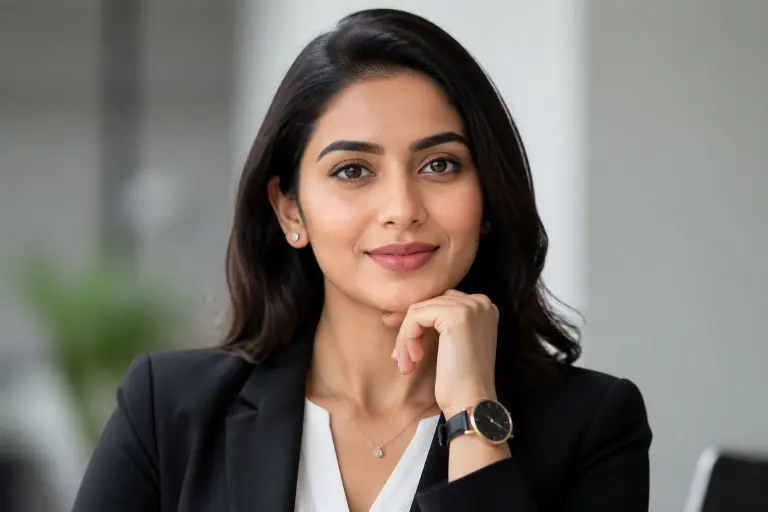
Choose classic stud earrings, a simple chain necklace, and a clean minimalist watch. Your accessories should complement your outfit seamlessly without stealing attention from what you are saying.
Grooming and Garment Maintenance
Did you know that small garment flaws can inadvertently signal a lack of attention to detail? Run a handheld steamer or iron over your clothes the night before your interview to eliminate every wrinkle.
- Check for Lint and Pet Hair: Keep a mini lint roller in your bag or car for quick last-minute touch-ups.
- Inspect Buttons and Hems: Ensure there are no loose threads, missing buttons, or frayed fabric lines.
- Mind the Footwear: Clean off dust or scuff marks from your shoes before walking into the building.
Quick Reference: Interview Outfit Framework Guide

Here is a quick summary chart to help you pick the perfect outfit based on your target industry:
| Industry / Environment | Recommended Outfit Framework | Primary Color Palette | Best Footwear Choice |
|---|---|---|---|
| Finance / Corporate Law | Full matching suit + crisp button-down | Navy, charcoal gray, onyx black | Closed-toe leather pumps, classic loafers |
| Tech / Marketing / Education | Tailored trousers + fine-knit top + blazer | Taupe, soft blue, cream, olive | Pointed-toe flats, low block heels |
| Creative / Design / Startups | Dark-wash denim + statement blazer + blouse | Jewel tones, subtle plaids, warm rust | Architectural flats, sleek leather boots |
| Remote / Video Interviews | Structured top/blazer + tailored bottoms | Cobalt blue, emerald green, plum | Comfortable flats (full outfit required) |
Preparing for a job interview is all about building authentic self-assurance, and your outfit plays a massive role in that equation. By selecting a framework that matches your industry and refining the small details, you set yourself up for immediate success.
Take time to prep your clothes the night before, review your resume points, and walk into that room knowing you look completely capable. Which outfit framework best fits your current career path? Pick your look, hold your head high, and go land that dream job!
“I’m HAJARAN RANI, a Pinterest Blogger and fashion curator dedicated to helping women elevate their style. Through Outfitmoment, I share expert advice on everything from professional office wardrobes to stunning wedding guest looks and seasonal trends. My mission is to simplify digital creativity and help others find their flawless look for every occasion. Check out my latest Pinterest boards for more daily inspiration!